For exercise 11, we had to find examples of the 12 principles of animation. When it comes to choosing a source for the examples, I decided to use something I’d watch anyways: recently I started watching Dragon Ball Z, starting with the Android arc (having seen the earlier arcs as a kid) — I enjoyed watching TFS abridged, and so I figured it’s about to watch a classic and see why everyone loves it. All the following examples are from episode 133.
Clip 1
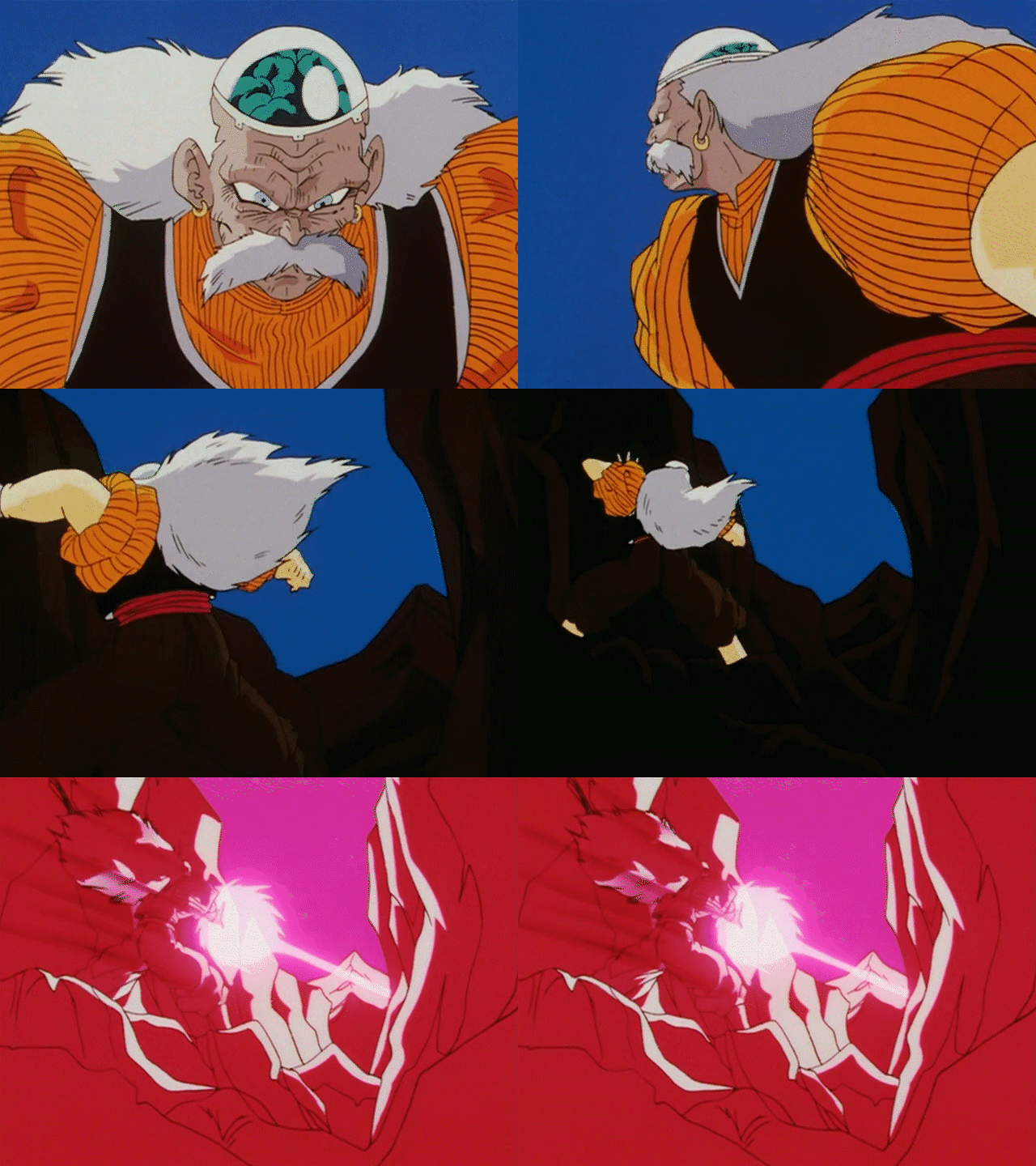
Here we see Dr. Gero fire a laser. The camera moves back as he turns around; this is a good example of solid drawing. Though the viewing angle and distance from him change throughout the shot, his proportions remain consistent. Along with this, we see an arc used for his motion, anticipation before he fires the laser, and though nothing actually physically moves, the lighting is varied while the laser is being fired to give a sense of secondary action to the scene.
The close-up of gero at the start also serves as a good talking point with regards to appeal — he is very clearly not drawn to be a nice guy. Maybe it’s the exaggerated furrowed brow, the gaunt cheekbones and overall angular bone structure of his skull, or maybe just the fact that his brain is visible in a vat bolted to his head.
Clip 2
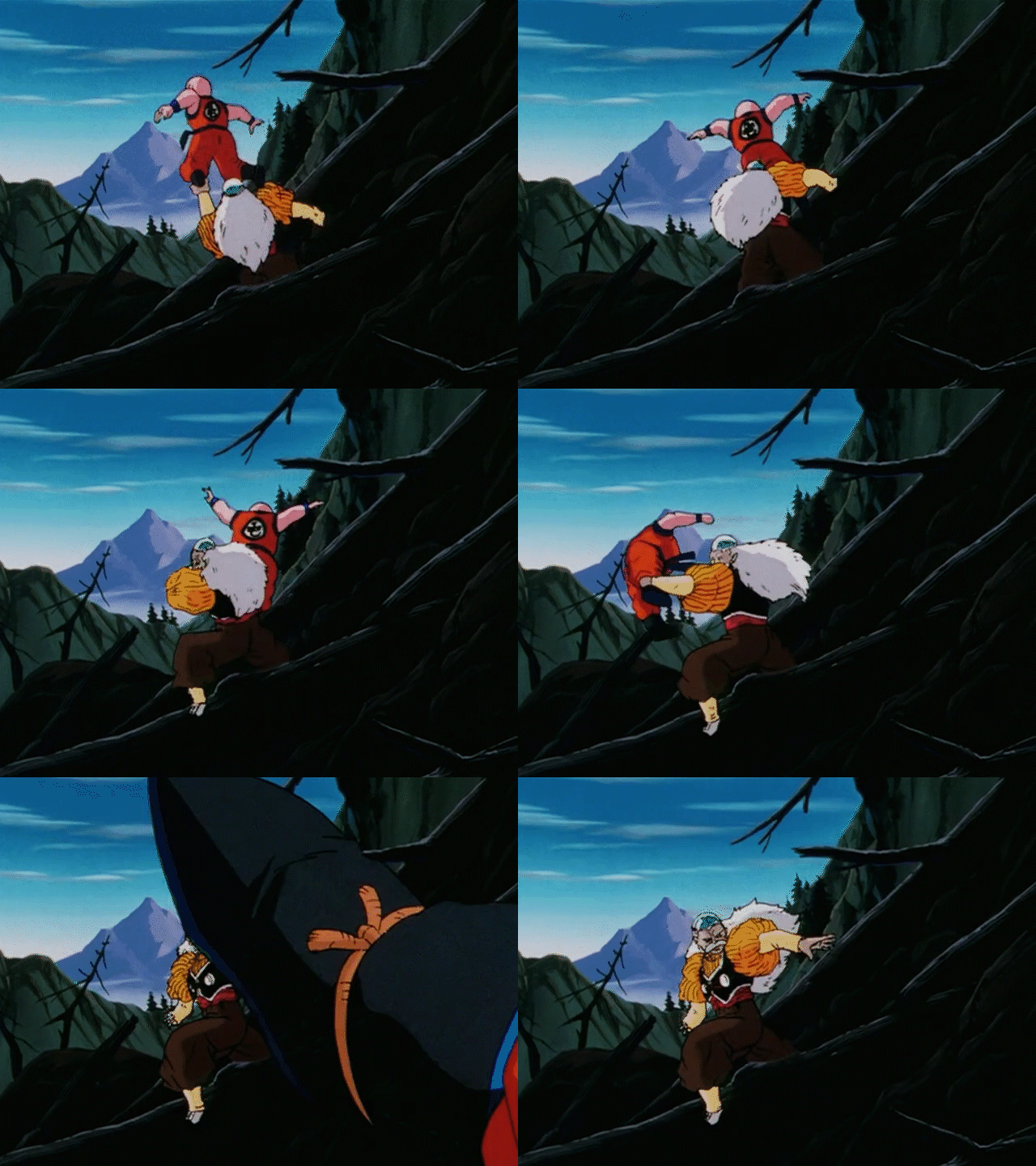
Here we see Krillin becoming acquanted with Newton’s first and second laws of motion, as taught by Dr. Gero. Again, an arc is used to define the throwing motion, as Gero spins around to fling Krillin. Before the toss starts, anticipation is shown by pulling Krillin down and tugging him slightly in the opposite direction of the turn. Let’s view this at 1/4th speed:
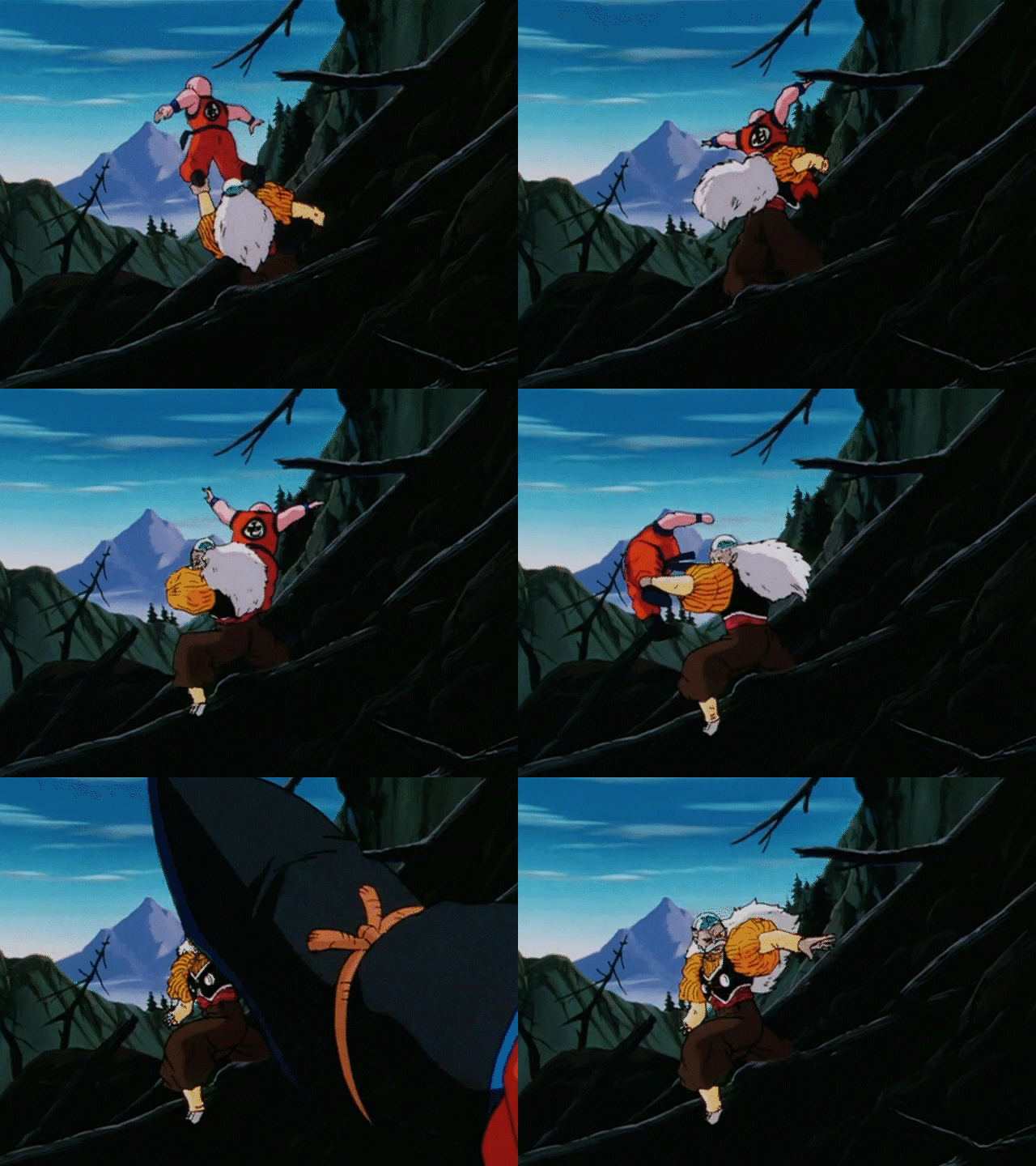
My eyes might be playing tricks on me, but during the spin, it looks like there’s a small amount of stretch on Krillin while Gero is spinning him around. Ignoring that, we see follow-through and overlapping motion: Gero’s leg repositions, his hair spins with him, and his arm continues to move after releasing Krillin before coming back in slightly, giving the illusion of momentum and inertia.
Along with that, we see a slow in and timing at play: many more frames are dedicated to spinning around than are given to Krillin actually flying through the air; to impart that sense of speed, Krillin is only visible for four frames once released (this is animated in twos, so only two distinct drawings).
Clip 3
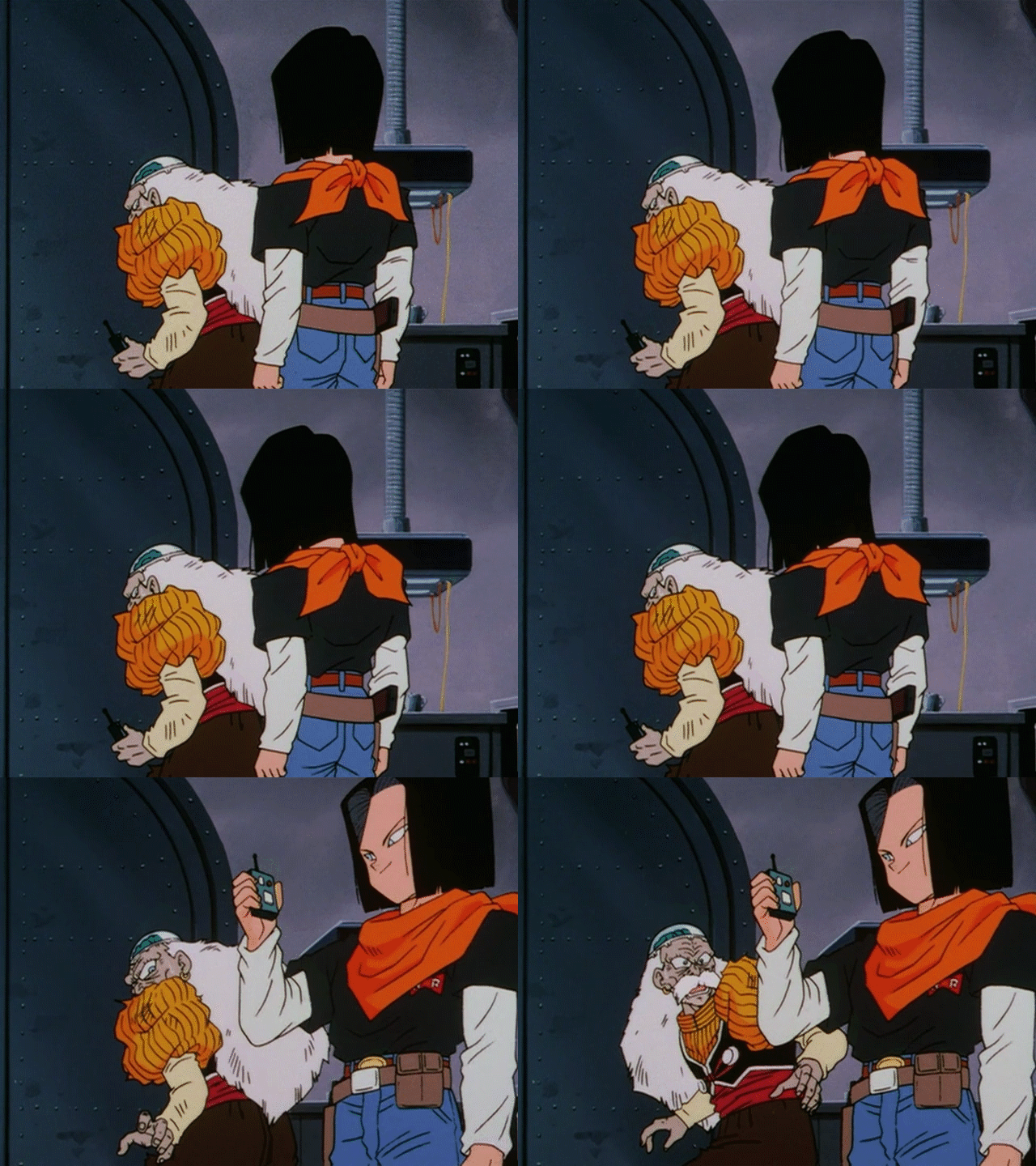
In this clip, Android 17 snatches the remote from Gero. This happens pretty quickly, so let’s slow it down to 1/5th speed.
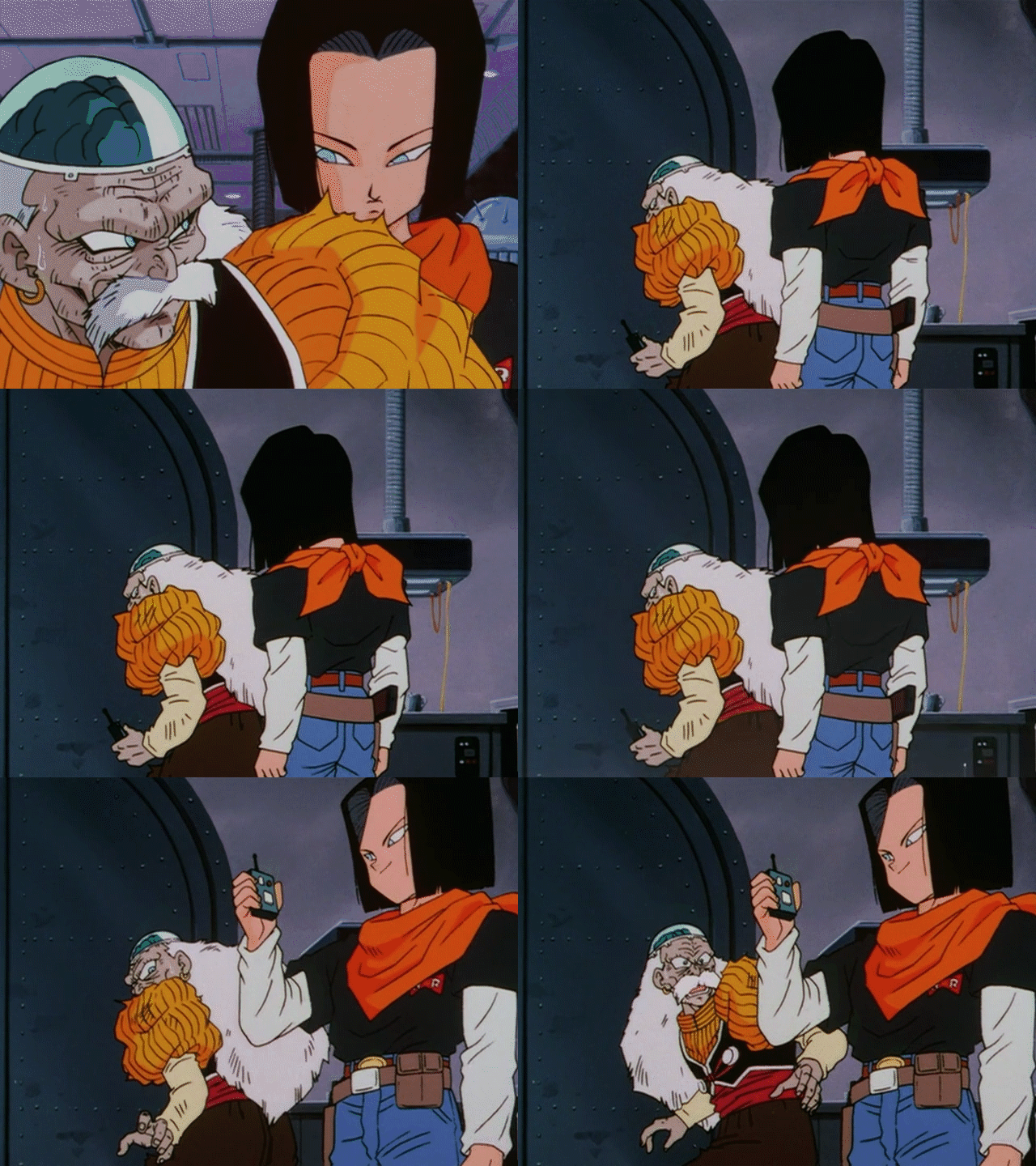
We get a bit of a slow in and anticipation, as Android 17 slowly leans in at the start, with 4 different poses in as many sets of twos. That said, for the actual snatch itself, there’s a single frame of a flash instead of motion. This seems to violate the principle of using a slow in, but I think it’s done to signify the speed at which the action occured. Immediately after, we see some staging, with yellow impact shapes drawing the eye to where the remote was. We still have a slow out, as we start to get more frames as 17 returns to a standing position, now holding the remote in hand. His motion does follow an arc, even if it’s only implied at the start (when the flash occurs), and there is follow-through, as he brings his hand far past its final resting position before bringing it back in front of him.